



TCG Anadolu: Multi-Purpose Amphibious Assault Ship and UAV Carrier Transformation
1. Why Is TCG Anadolu Important?
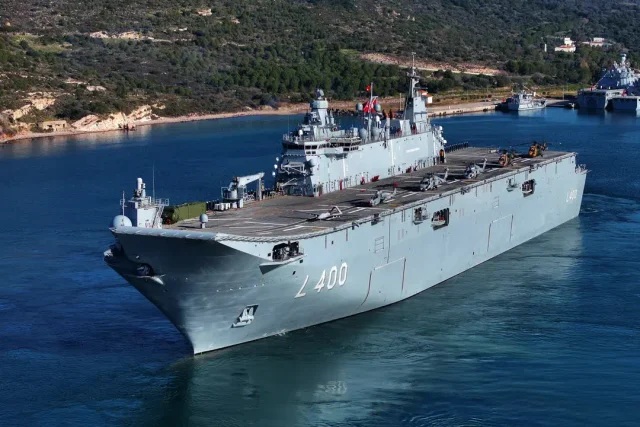
TCG Anadolu (LHD) is a multi-purpose amphibious assault ship of the Turkish Navy and a next-generation naval platform based on unmanned aerial vehicles. In modern naval warfare, LHD (Landing Helicopter Dock) class ships stand out as floating operational centers capable of deploying marines, armored vehicles, and landing elements to the field by combining air and land components within the same structure. In this respect, unlike classical warships, Anadolu assumes a role focused on power projection and expeditionary operations, representing a concrete reflection of Türkiye’s strategic transition from a coastal defense-oriented approach to a naval force capable of operating effectively across broader geographies.
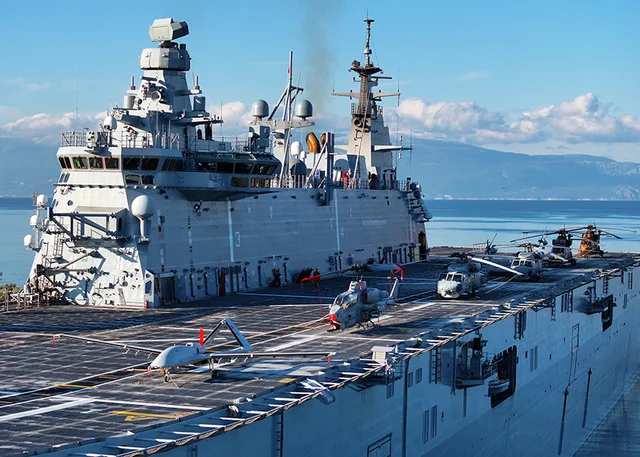
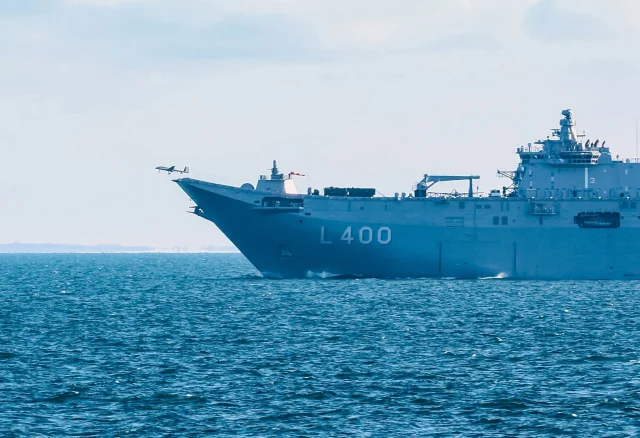
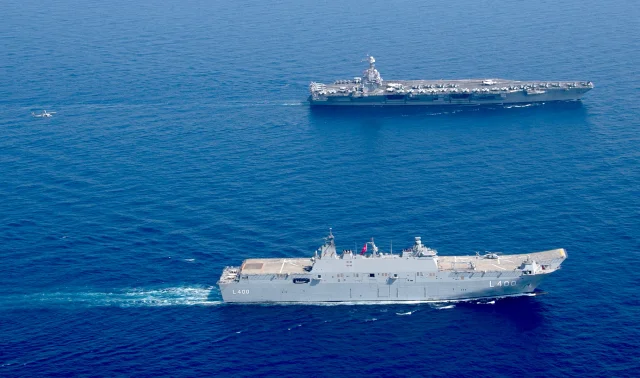
Although the question “is it an aircraft carrier?” is frequently asked regarding the platform’s classification, the technical answer is “no.” However, with its flight deck, 12-degree ski-jump ramp, and evolving unmanned aerial vehicle concept, Anadolu is a hybrid platform that goes beyond classical definitions. While it falls into the same category as the United States’ large-deck amphibious ships, Spain’s Juan Carlos I class, and China’s Type 075 platforms on a global scale, Anadolu’s shift toward a structure centered on unmanned systems—unlike these ships that primarily rely on manned air assets—places it in a unique position in terms of next-generation naval warfare doctrines.
2. Development Process of TCG Anadolu: Project, Construction, and Doctrinal Shift
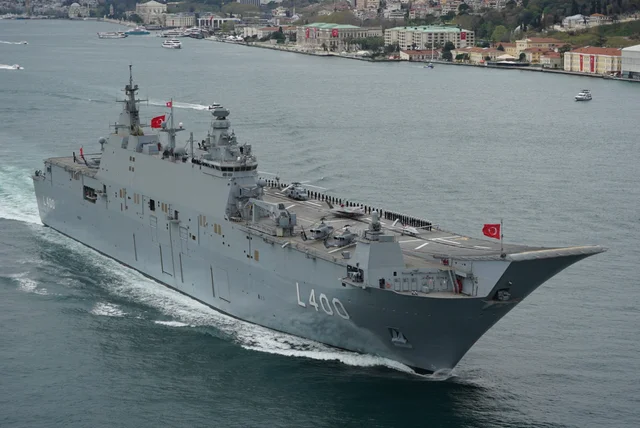
The need for an LHD emerged from the Turkish Naval Forces’ objective to go beyond coastal defense missions and achieve the capability to conduct amphibious operations, crisis management, evacuation, and humanitarian aid missions in distant geographies. The project was developed in cooperation with Navantia, based on the Juan Carlos I class design. However, Anadolu is a unique variant shaped according to the operational requirements of the Turkish Naval Forces, differentiated by domestic system integration and mission priorities. Built at Sedef Shipyard in Tuzla, Istanbul, the ship was launched in 2019 and entered service on April 10, 2023, demonstrating the integration capability of Türkiye’s defense industry ecosystem.
The most critical strategic turning point in the process was the cancellation of the plan to deploy F-35B fighter jets following Türkiye’s removal from the program.
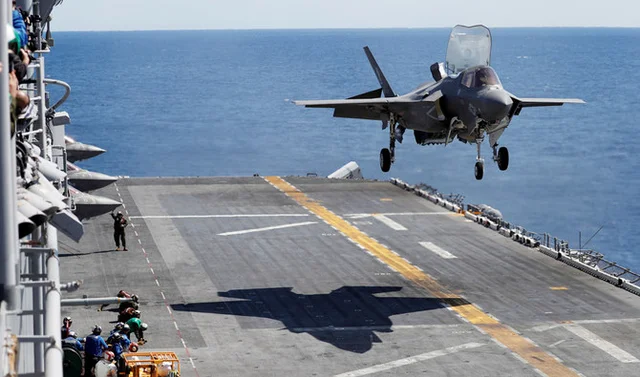
Although this development initially created a risk of a capability gap, the process gradually evolved into a different model; the platform moved away from a structure centered on manned air power and shifted toward an operational model based on unmanned aerial vehicles. This transformation is not merely a technical adaptation but a unique approach that has evolved into a doctrine independent of a compensatory solution, redefining how air power is generated in modern naval warfare.
3. Physical and Operational Characteristics of TCG Anadolu
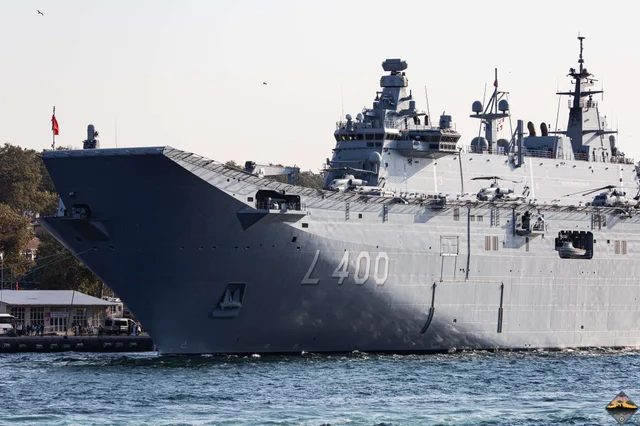
With a full-load displacement of approximately 27,000 tons, TCG Anadolu is a massive asset distinguished by its length exceeding 230 meters and its wide flight deck. Capable of reaching speeds above 20 knots, the ship is designed for long-duration and uninterrupted mission execution. The platform is positioned as a comprehensive operational center capable of carrying not only its crew but also marines, armored vehicles, and various logistical elements.
In addition to its military capacity, the fully equipped hospital, operating room, and medical infrastructure on board provide Anadolu with a critical role in disaster response, evacuation, and humanitarian aid missions. Designed to sustain air operations up to sea state 5, the platform ensures continuity of air power in open seas, enhancing operational flexibility.
4. Air Assets and Aviation Infrastructure
The most distinctive feature of TCG Anadolu is its aviation architecture designed for aircraft capable of short takeoff via its 12-degree ski-jump ramp. The hangar area, approximately 900–1,000 m² in size, can be combined with the vehicle deck when necessary to expand capacity. The ship has a flexible configuration capable of accommodating 19 helicopters or approximately 30 UAVs in the hangar, and 10 helicopters or 11 UAVs on the flight deck. Total capacity can reach 30 to 50 UAVs depending on mission configuration.
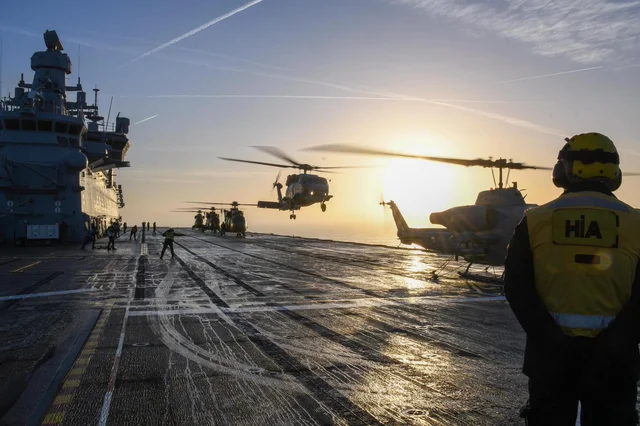
There are two main aircraft elevators with a lifting capacity of 27 tons for transferring air assets.
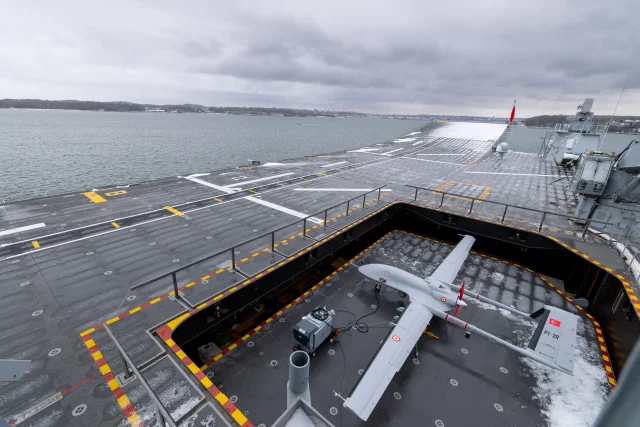
Air Elements and Technical Challenges
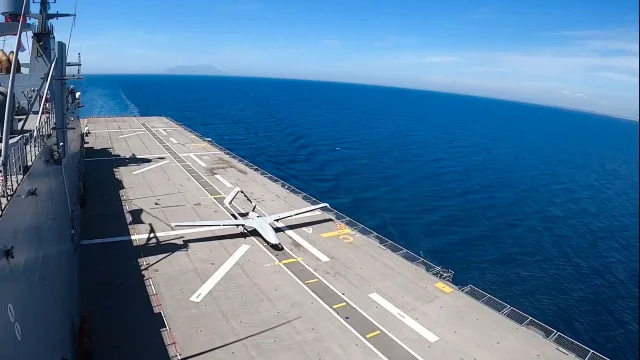
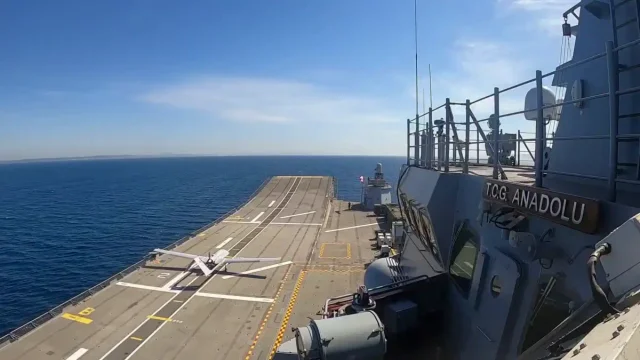
The platform can deploy AH-1W Super Cobra and T-129 ATAK attack helicopters, as well as heavy transport assets such as SH-70B SeaHawk and CH-47 Chinook. On the unmanned side, Bayraktar TB3 performed its first successful mission in 2024 with its foldable wing structure. Future integration of Kızılelma and Anka-III is planned. However, the use of jet-powered and heavier UAVs introduces critical engineering requirements, particularly during landing and takeoff phases on the current deck, which lacks arresting gear. While the existing structure offers high efficiency for optimized platforms like TB3, full operational use of jet-powered systems will require additional design modifications and advanced engineering solutions.
5. Amphibious Power and Well Deck Capacity
TCG Anadolu is designed to deploy a battalion-sized amphibious unit along with its vehicles to crisis zones and conduct shore landings. While large vehicle decks carry heavy assets such as Altay tanks and ZAHA amphibious vehicles, the light cargo deck is allocated for wheeled vehicles and logistical loads. The well deck at the stern of the ship serves as the center of operations. Four LCM and two LCVP landing craft stationed here enable the safe transfer of troops from beyond the shore to the coastline.
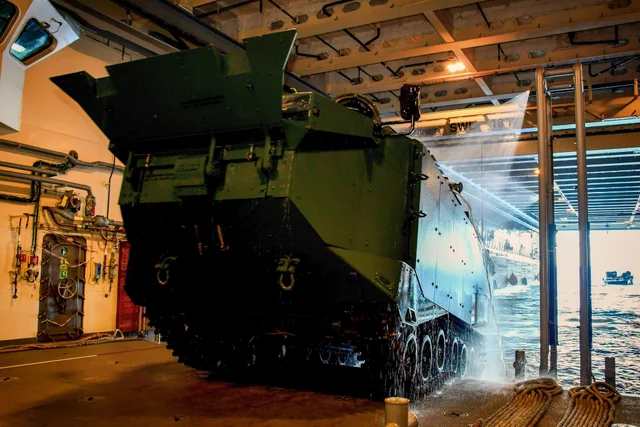
The platform demonstrated its multi-domain operational capability during the NATO Steadfast Dart exercise in 2026 by managing the deployment of 2,000 personnel and 150 armored vehicles. In this exercise, Bayraktar TB3’s first NATO operation under Baltic conditions showcased not only Anadolu’s theoretical capacity but also its sustainability under diverse climatic and operational conditions. This structure emphasizes that the platform adopts a doctrine aimed at producing sustained impact in the field rather than “hit-and-run” type operations.
6. Combat Systems and Self-Defense Layers
Sensor Architecture
The sensor infrastructure of TCG Anadolu includes the SMART-S Mk2 main search radar, ALPER navigation radar, and the PİRİ infrared tracking system, providing a multi-layered detection capability. On the electronic warfare side, the ARES-2N system offers early warning, while the ARAS-2023 sonar addresses underwater threats.
Self-Defense Layers
For self-defense, Phalanx CIWS (close-in defense) and ASELSAN STOP systems against asymmetric threats are used, while Hızır torpedo countermeasure and TORK (hard-kill) systems complete underwater protection.
WEAPONS & SENSORS
- 2x Phalanx CIWS
- 5x Aselsan STOP 25mm RCWS
Operational Approach
Rather than forming a large-scale air defense umbrella on its own, Anadolu focuses primarily on point defense capabilities. Therefore, in high-intensity threat environments (such as against supersonic missiles or high-altitude munitions), its true operational value emerges within a task group composed of destroyers and frigates. Within this structure, Anadolu is positioned not as a direct attack platform but as a “force multiplier” and “operational hub” that integrates air and land elements with sensor and decision-support mechanisms.
7. How Does TCG Anadolu’s Propulsion System Work?
Unlike conventional warships, TCG Anadolu is equipped with a diesel-electric propulsion system. The energy generated by five diesel generators is transmitted to the propulsors through electrical systems rather than direct mechanical drive. This structure ensures lower vibration levels and a more stable operating environment. This low-vibration structure is particularly critical for sensitive takeoff and landing operations and is among the key engineering choices directly affecting the ship’s aviation performance.
TCG Anadolu’s engineering approach is built not only on mobility but also on continuity and mission endurance. Developed with an approximate 70% domestic content rate, the platform is the product of over 100 subcontractors and millions of man-hours of engineering effort. The ship’s maneuverability is provided by two Siemens SiPOD propulsion units located at the stern. These systems, capable of rotating 360 degrees, grant the ship high maneuverability, especially in confined areas. Offering a maximum speed of approximately 21 knots and a range of 9,000 nautical miles, the platform is optimized for long-duration and long-distance missions.
8. What Is the Strategic Role of TCG Anadolu?
TCG Anadolu provides Türkiye not only with the ability to maintain a presence at sea but also to generate continuous and sustainable air power from the sea. One of its strategic contributions is granting Türkiye a true expeditionary warfare capability. This capability means not only transporting forces but also deploying, supporting, and sustaining them independently in distant geographies. Together with systems like Bayraktar TB3, the platform offers long-endurance surveillance, low-cost operations, and uninterrupted air support.
In this model, the operational chain functions in a multi-layered manner: landing craft and amphibious elements establish initial contact in the field, helicopters provide rapid deployment and fire support, while UAVs undertake reconnaissance, surveillance, and target acquisition throughout the operation. In NATO operations, Anadolu stands out as a platform that can occupy a central role in multi-domain operations with its command-control infrastructure and UAV integration. This integrated structure transforms the platform into a center that not only transports forces but also manages operations in the field.
UAV-Centric Air Power and Its Limitations
Unmanned systems offer significant advantages such as lower cost, reduced personnel risk, and long-duration operational capability. However, the current capabilities of UAVs have not yet reached the level of protection provided by manned fighter aircraft, especially in air-to-air engagements. This situation does not eliminate the importance of manned air assets within a task group and demonstrates that the platform achieves maximum effectiveness when operating alongside escort elements.
9. Is TCG Anadolu a UAV Carrier?
The current structure of TCG Anadolu distinguishes it from classical amphibious assault ships and brings it closer to a model centered on unmanned aerial vehicles. The process that began with Bayraktar TB3 may expand in the future with more advanced unmanned systems. This approach offers an alternative model to the classical aircraft carrier concept. Instead of a high-cost structure based on manned platforms, a more flexible and sustainable air power model emerges. In this context, TCG Anadolu is not a compromise but a transitional platform.
10. Which Ships Is TCG Anadolu Compared With?
Juan Carlos I
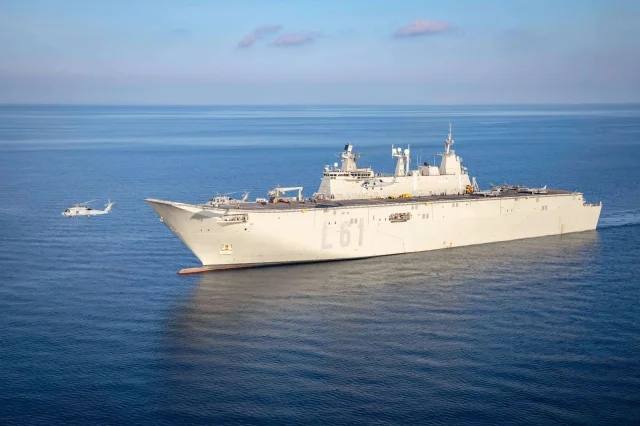
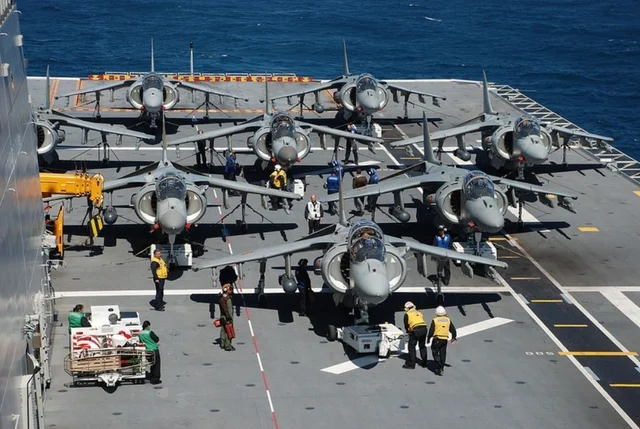
Although the design origin is the same, the diesel-electric propulsion system preferred in Anadolu provides a lower-vibration and more stable environment for flight operations, creating a significant advantage. The main distinction is doctrinal; while Juan Carlos I and its derivatives maintain a classical model based on manned air assets, Anadolu presents a different operational framework centered on unmanned systems.
USS America Class
While these ships of the U.S. Navy focus on manned air power, TCG Anadolu adopts a different approach based on unmanned systems. Although the U.S. model provides strong air superiority, cost, maintenance burden, and pilot dependency may limit operational sustainability. Anadolu’s approach offers a balance point with lower costs but different capability limits.
Type 075
While China’s Type 075 class ships offer a helicopter-centric structure, TCG Anadolu defines air power through a different concept. Anadolu’s distinction lies in placing air power not merely as a supporting element but at the center of operations.
11. The Future of TCG Anadolu
TCG Anadolu is not only an existing platform but also a transformation platform where the future structure of naval power is being tested. The possibility of a second ship and the integration of more advanced unmanned systems indicate that this process will continue. In the future, it is anticipated that more advanced unmanned combat aircraft integration and a fully UAV-centered air wing will lead to a path different from the classical aircraft carrier concept.
12. Conclusion
TCG Anadolu is a concrete example of the transformation occurring in modern naval warfare. The platform introduces a new operational model by integrating air, land, and unmanned systems. This approach represents not only a ship design but also a paradigmatic shift in how naval power is generated.
The issue is no longer merely building larger ships, but redefining how to generate continuous and sustainable air power from the sea. Rather than being a platform that applies existing concepts, TCG Anadolu is becoming a reference point that proposes a new approach to the future of naval power. Will future navies turn toward billion-dollar aircraft carriers, or toward more flexible, distributed, and sustainable UAV platforms?
:contentReference[oaicite:0]{index=0}



