


1. Introduction: Shifting Paradigms in the Modern Maritime Battlespace
The modern maritime security architecture is undergoing a transformation in which anti-access and area-denial (A2/AD) capabilities are rapidly proliferating and sea control is no longer an absolute but a contested concept. The hypersonic missile threat, long-range precision strike systems, and unmanned maritime-aerial assets are challenging the classic fleet-centric approach to naval warfare, making it imperative for surface platforms to be not merely “carriers” but active and resilient nodes within network-centric warfare. For this reason, today’s combatant must not only integrate sensors, weapons, and command-and-control elements into a single hull, but also be designed as a “digital fighting unit” that can connect to the data backbone of joint operations.
In this new operational environment, the “Distributed Lethality” concept seeks to distribute striking power across a larger number of more flexible platforms rather than concentrating it on a small number of major platforms.
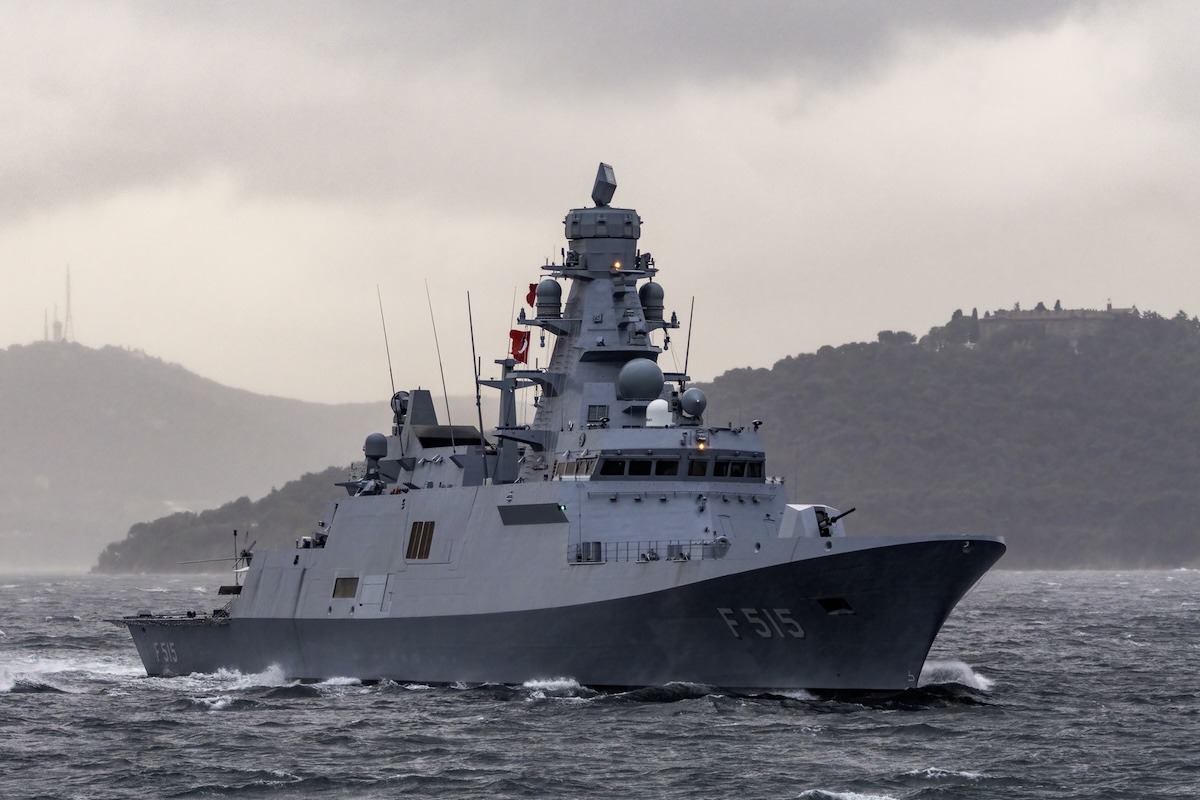
Istanbul-class frigates are positioned precisely at this doctrinal inflection point; they stand out as the tangible embodiment of the Turkish Navy’s transition from a coastal-defense-oriented structure to a naval force architecture capable of establishing sea control and conducting power projection in the open seas. The critical aspect of this transition is as follows: “open-sea presence” is measured not only by the number of platforms, but by the level of layered air defense, long-range strike, and resilience to network-centric warfare those platforms possess.
In today’s maritime battlespace where asymmetric and symmetric threats are intertwined, the Istanbul class has been designed as a multi-role force multiplier capable of executing independent missions in high-intensity conflict environments, moving beyond the escort role and, when necessary, generating both “protective” and “striking” effects within the same hull as part of a task group.
2. The Program’s Genesis: Doctrinal Requirement and the Evolution of MİLGEM
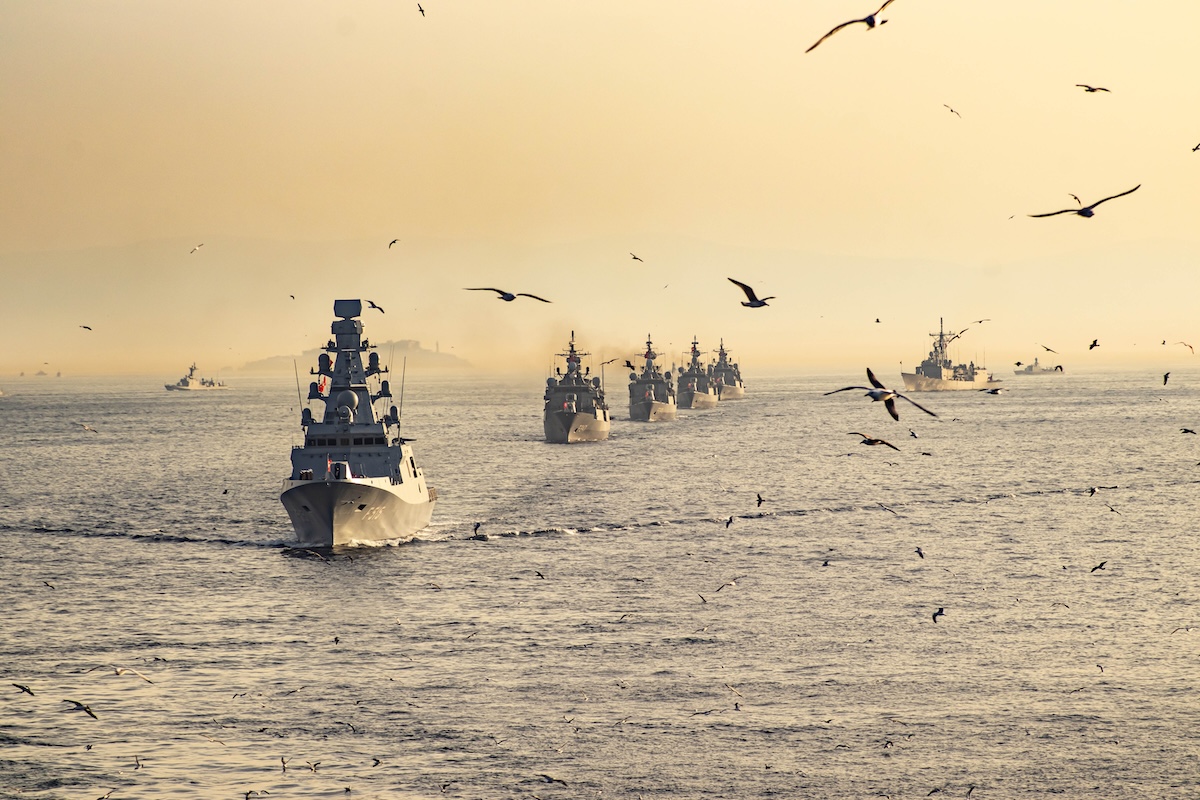
The Istanbul-class frigates represent the second phase of the MİLGEM program, which forms the backbone of Türkiye’s vision for indigenous warship development. In the first phase of the program, the aim was to achieve effectiveness in coastal and near seas with the Ada-class corvettes focused on anti-submarine warfare (ASW). However, the evolving regional threat perception has made it necessary for the Turkish Navy to maintain a continuous and deterrent presence not only in littoral waters but also in contested open-sea areas. This necessity gave rise, before the need for a “larger ship,” to the need to “consolidate a broader mission set on the same platform.”
As a result of this requirement, the design process initially planned as TF-100 culminated in the platform evolving from a corvette into a frigate. The primary driving force behind this evolution was the organic air defense capability intended to be introduced to the ship. The integration of the National Vertical Launching System (MİDLAS) was not merely an addition of a weapon; it required the ship to be fundamentally reconsidered in terms of volume, stability, and mission definition. The lengthening of the hull (approximately 10–13 meters) was not simply a matter of “making room,” but is tied to engineering choices made to manage the center-of-gravity and stability requirements introduced by the VLS, preserve hydrodynamic efficiency, and sustain speeds in the 29+ knot class.
From an industrial standpoint, the process is being conducted under the leadership of the Presidency of Defence Industries and with STM as the main contractor, shaped by the contributions of more than 220 domestic companies.
An approximate 80% localization rate here is not a PR phrase, but the direct output of the objective of operational continuity and immunity to embargoes: it means reducing foreign-policy vulnerability across modernization, procurement, and maintenance processes throughout the ship’s life cycle.
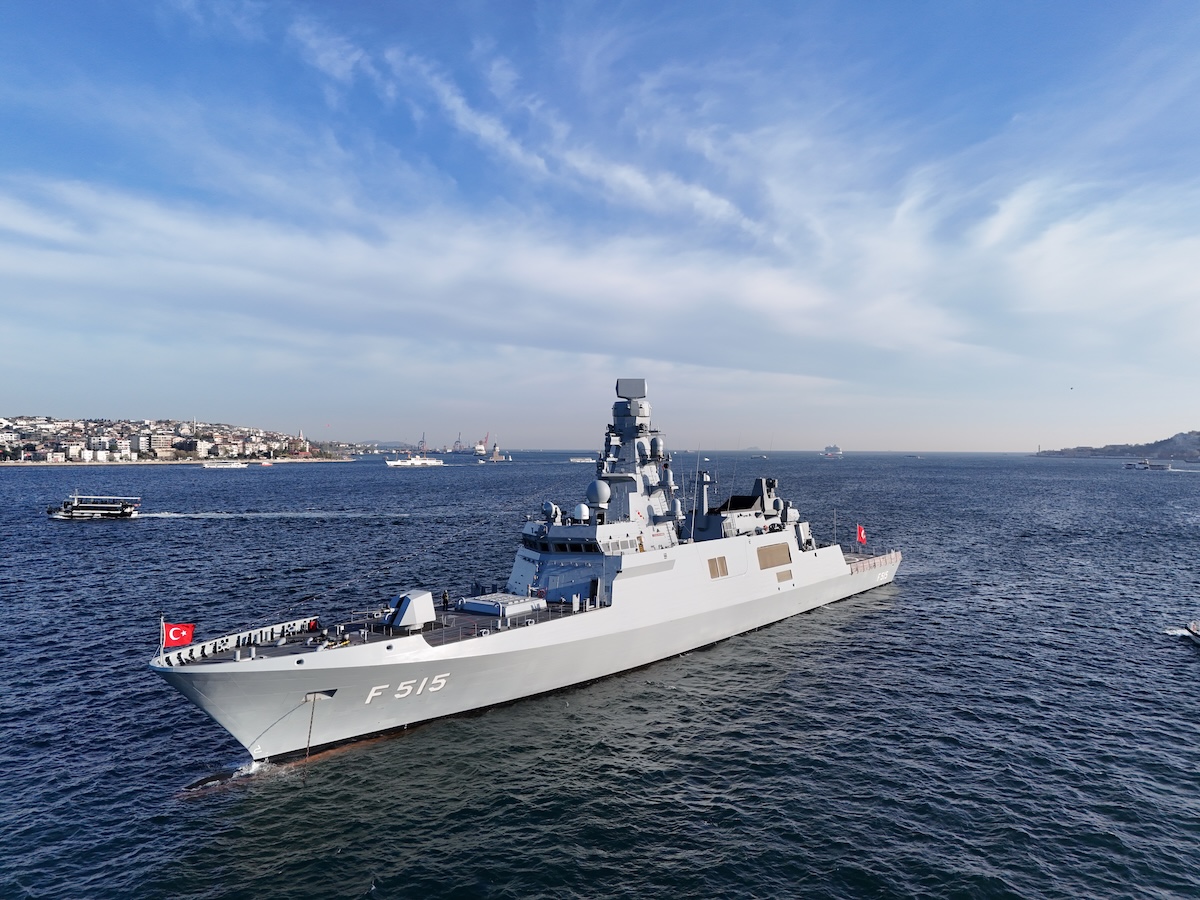
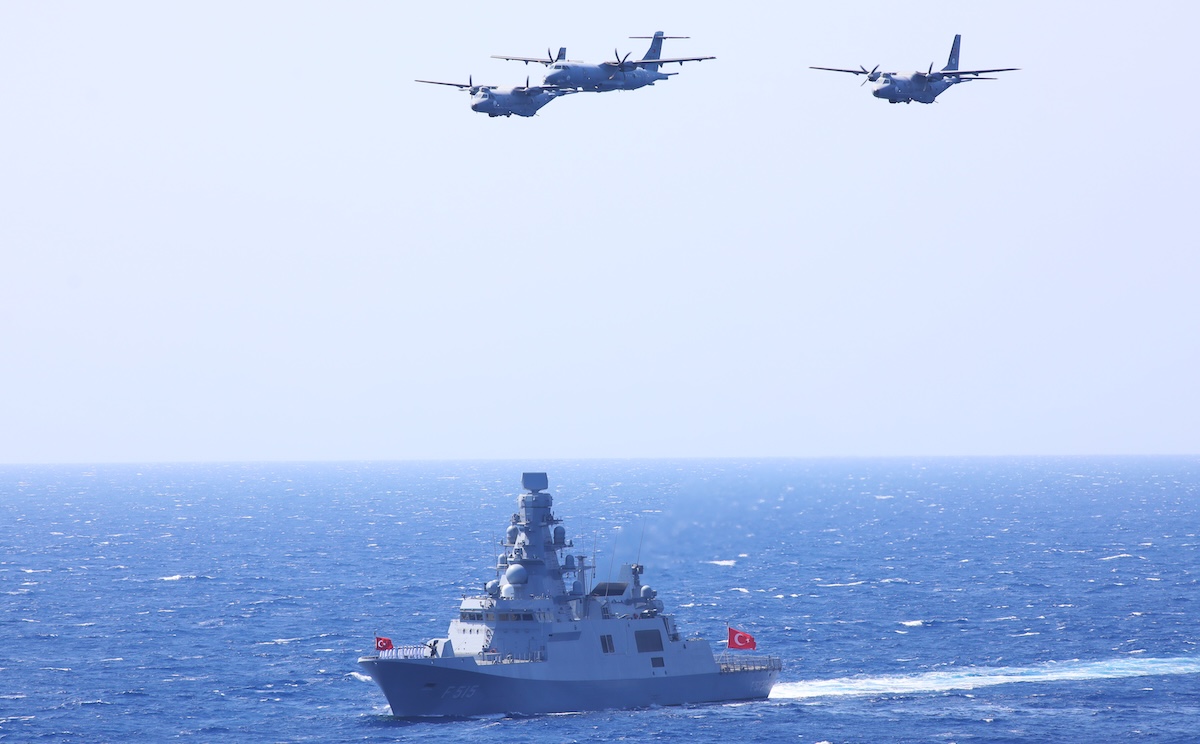
The institutional threshold of this program was formalized on 12 April 2019 with the contract signed between SSB and STM for the first ship, TCG ISTANBUL (F-515). The subsequent timeline has shown that the project has been addressed not as a “single ship,” but as a fleet-scale transformation program.
3. Operational Definition and Mission Set
The Istanbul-class frigates have been optimized to execute air defense warfare missions in addition to surface warfare and anti-submarine warfare, thanks to advanced sensor fusion and a network-centric warfare architecture. The platform offers a balanced operational profile between escort duties and independent task group leadership. This balance is critical in that it brings together under one roof the capabilities of “operating independently” and “providing protection-strike coordination within a task group.”
- Technical framework: 113.2 m overall length, 14.4 m beam, ~3,150 tons displacement, 29+ knots speed, 5,700 nm range at 14 knots, 123 personnel
- Aviation component: capability to operate 2 S-70B Seahawk helicopters and UAV operations
The technical framework of the class (113.2 m overall length, 14.4 m beam, ~3,150 tons displacement, 29+ knots speed, 5,700 nm range at 14 knots, 123 personnel) demonstrates that the ship has been designed to support not only regional missions but, when logistics planning is done correctly, sustained blue-water operations as well. As an aviation component, the capability to operate 2 S-70B Seahawk helicopters and UAV operations extends the ship’s influence beyond the hull horizon, particularly in ASW, ISR, and the targeting chain.
4. Strategic Implication I: Air Defense Capability and the MİDLAS Effect
The most critical doctrinal threshold that differentiates the Istanbul class from the Ada class is the vertical launch capability provided via MİDLAS. Transitioning to a national VLS architecture has enabled strategic autonomy in operational planning by breaking the foreign-system dependency to which the Turkish Navy has long been exposed. This inflection point is not merely about “being able to launch missiles,” but about disseminating the air defense doctrine across the fleet.
- VLS: 16-cell MİDLAS
- Compatible missile classes: HİSAR-D derivative and ESSM-class missiles
- Operational output: layered air defense umbrella for the task group
The ability to fire HİSAR-D derivatives and ESSM-class missiles from the 16-cell MİDLAS makes it possible for the platform to create a layered air defense umbrella not only for itself but also for the task group it escorts. Thus, the Istanbul class expands sea denial capacity not only in the strike dimension but also in air defense, significantly constraining an adversary’s freedom of action. In more practical terms: it generates “maneuver space against the air threat” for the task group, providing not only “survivability” but the capability to “sustain operations.”
5. Strategic Implication II: Network-Centric Warfare and Sensor Fusion
The operational effectiveness of the Istanbul class aims to shorten decision-making time even under high-intensity saturation attacks, thanks to an integrated architecture formed by indigenous systems. Three elements stand out as the backbone of this architecture:
ADVENT Combat Management System
The ADVENT Combat Management System transforms the platform into an active node of network-centric warfare, enabling simultaneous data sharing with maritime–air–land elements. ADVENT’s primary strategic output is its ability to fuse data from sensors into a single picture and accelerate the detect–identify–engage cycle. In this respect, it assumes the role of the ship’s “brain.”
CENK-S AESA Radar
The CENK-S AESA Radar supports simultaneous multi-target engagement capability through multi-target detection and tracking and integration with MİDLAS. AESA architecture represents a threshold that “changes the rules of the game” in terms of maintaining situational awareness even in complex electronic warfare environments. When the contribution of AKREP fire-control and illumination radars is added, the targeting chain becomes tighter and more reliable.
Strike and Defense Balance
- Surface warfare: 16 ATMACA cruise missiles
- Point defense: 35 mm GÖKDENİZ CIWS and 2 × 25 mm ASELSAN STOP
- Undersea threat: 2 × 324 mm twin torpedo launchers and a national sonar system
The balance of strike and defense ensures that the ship remains both deterrent and resilient: in surface warfare, 16 ATMACA cruise missiles generate a serious striking capacity compared to platforms of similar tonnage within the context of the distributed lethality concept, while in the terminal phase the 35 mm GÖKDENİZ CIWS and 2 × 25 mm ASELSAN STOP complete the close-in defense umbrella. Against the submarine threat, ASW capability is supported by 2 × 324 mm twin torpedo launchers and a national sonar system.
This whole makes the ship not merely a weapons carrier but one of the cognitive centers of the operation: seeing the target, interpreting it, sharing it, and engaging when necessary. In addition, the national electronic warfare suite and countermeasure systems improve the platform’s “survivability calculus” by jamming enemy radars and deceiving missile threats.
6. Fleet Structure and Production Timeline: Industrial Mobilization
The first ship of the program, TCG Istanbul (F-515), entered service on 19 January 2024, forming the operational foundation of the class. However, the milestones followed to reach this point show that the project is more than “shipbuilding”; it is an institutional and industrial mobilization: the launching on 23 January 2021, the first sea experience following the flag-hoisting on 20 June 2023, and finally delivery to the Navy at the “Power in the Blue Homeland” handover ceremony on 19 January 2024.
- 23 January 2021: launching
- 20 June 2023: first sea experience following flag-hoisting
- 19 January 2024: delivered to the Navy at the “Power in the Blue Homeland” handover ceremony
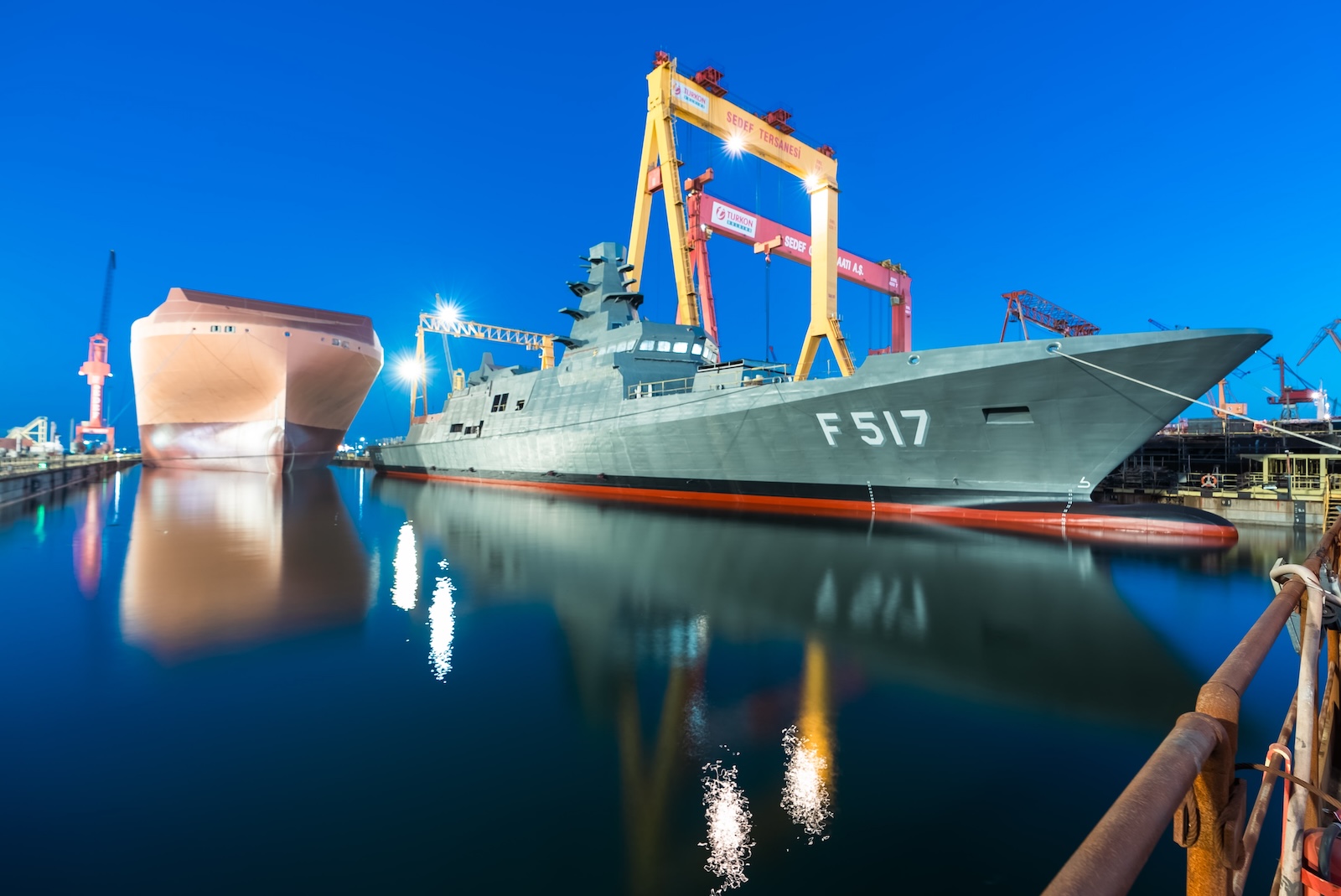
The expansion of the class to a fleet scale also progressed through critical turning points: the initiation of the procurement process for the 6th, 7th, and 8th ships at the SSİK meeting on 20 December 2022; the signing of the contract for IZMIR, IZMIT, and ICEL on 6 April 2023; and the steel-cutting on 10 April 2023 demonstrated that the program had entered a serial production discipline. The simultaneous launching of TCG IZMIR and TCG IZMIT in January 2025 was the schedule counterpart of this mobilization.
With SSİK decisions expanding the project to a total of 8 ships, it is testing Türkiye’s rapid industrial mobilization capacity in naval force construction. In the production process carried out within the framework of the STM–TAİS OG joint venture, a strategic division of labor has been established among shipyards. The targeted delivery timeline of approximately 36 months points to a highly ambitious schedule by global defense industry standards, while also serving as a test of supply chain management and the maturity of indigenous subsystems.
7. Regional and Global Effects: Defense Diplomacy and Export Strategy
The Istanbul class represents the beginning of a high value-added platform era in Türkiye’s defense exports. The export contract for two frigates signed with Indonesia within the scope of IDEF 2025 produced not only commercial but also geopolitical outcomes. Because frigate exports mean not only a “platform sale,” but also the establishment of an architecture of training, logistics, maintenance and sustainment, modernization, and long-term strategic relations.
- Export logic: “platform sale” + “long-term relationship architecture”
- Cycle: “produce–export–renew”
- Critical threshold: exports not turning into a loss of capacity
In this context, redirecting certain platforms initially planned for the Turkish Navy to exports, while building new ships in return, operationalizes a “produce–export–renew” cycle. The critical point here is that exports must not turn into a loss of capacity: on the contrary, they are designed as a lever that expands industrial bandwidth and encourages sustainable production.
The approximately 1 billion USD contract value reflected to the public at DIMDEX 2026 confirms the platform’s competitiveness in the global market, while also showing that in Türkiye’s defense diplomacy, naval platforms now function as a strategic instrument beyond being merely a “product.”
8. Conclusion and Future Projection
The Istanbul-class frigates are not only a new platform for the Turkish Navy; they serve as a technological stepping-stone on the path to the TF-2000 Air Defense Destroyer project, where critical systems are matured. Maturing core elements such as MİDLAS, CENK-S, and ADVENT on the same platform creates a learning curve for transitioning to larger air defense destroyers in the future, fed not by “theory” but by operational data.
This class is positioned as a command-and-control-centric combatant element in the digitalized battlespace, moving beyond the traditional escort role. In a future where unmanned surface and undersea vehicles become increasingly dominant, will the Istanbul class become a primary command ship for these systems, or will it remain the most resilient defensive link of the distributed lethality doctrine? The answer will determine not only the direction of the Turkish Navy, but also that of 21st-century naval warfare. Because power at sea is no longer solely “firepower,” but a synthesis of data, networks, resilience, and production tempo.
This whole, makes the ship not merely a weapons carrier but one of the cognitive centers of the operation: seeing the target, interpreting it, sharing it, and engaging when necessary.
In addition, the national electronic warfare suite and countermeasure systems improve the platform’s “survivability calculus” by jamming enemy radars and deceiving missile threats.